
DIAPROTECT®
The Power Coating for Maximum Wear Protection
DIAPROTECT® coatings for maximum wear protection in extremely demanding areas of application
- Maximum wear protection with diamond
- Available as a thin-film system (10-30 μ)
- Available as a thick-film system (30-100 μ)
- Protection against particle and chemical wear
- Works on all substrates
Applications
Optimal Wear Protection
Generally, various devices and systems experience movement between parts, or sliding and friction processes between equipment and the products being processed. In most cases, this results in more or less pronounced wear on equipment parts. Such wear loads can occur, for example, in equipment used for extracting raw materials in the oil industry, but also in the production of textile products.
To maintain the functionality of equipment and systems, wear at such contact surfaces must be effectively prevented or reduced. Chemically and electrolytically deposited nickel and nickel-phosphorus coatings are very well suited as surface protection.
DIAPROTECT® coatings were specifically developed to protect against severe abrasive and chemical wear.
The hardness of a DIAPROTECT® layer can be adjusted to values between approximately 500 HV and 1,100 HV, depending on the phosphorus content and post-treatment. This allows surfaces to be adapted to the respective type of load, such as different friction stresses, different mechanical loads, or chemical resistance. The highest wear resistance of DIAPROTECT® is achieved primarily through its design as a dispersion layer, with diamond predominantly used as the embedded particle. The layers are deposited in thicknesses of approximately 10 μm up to several hundred micrometers.
In addition to good wear resistance, DIAPROTECT® coatings are also characterized by very high corrosion resistance, resulting in excellent long-term durability for a wide range of technical applications.
Typical Applications for DIAPROTECT® Coatings:
- Pump bodies and rotors in the chemical industry
- Heavily stressed parts in the textile industry
- Components from oil and gas extraction and the chemical industry
Optimization through combination: A combination coating with a thickness of up to 10 μm with DIASHIELD® can reduce surface roughness. This can be due to an overly rough substrate, or when depositing DIAPROTECT® coatings with thicknesses significantly above 20 μm.

At a Glance
Type
Dispersion coating made of chemical nickel-phosphorus or electrolytic nickel or nickel-phosphorus
Properties
- Wear-resistant friction pairing of metallic components
- Adjustable hardness of the nickel-phosphorus layer (approx. 550 HV0.1 to approx. 1,100 HV0.1)
- High corrosion resistance for both nickel and nickel-phosphorus
- Good contour accuracy and very uniform layer thickness with chemical nickel
- High layer thicknesses when using electrolytic nickel
Application
Sliding pairings in extremely demanding systems with high friction and corrosion loads, such as equipment used for extracting raw materials in the oil industry, but also in plants for manufacturing textile products.
Coating Characteristics
Nickel-phosphorus layer from approx. 5 μm to approx. 300 μm with dispersion substances
Nanodispersions (< 1 μm) up to dispersions > 1–12 μm
Friction value μ = <0.3
Substrate Characteristics
Base material suitable for electrolytic coating, with adapted, defined roughness
Example Solutions
DIAPROTECT in Use
There Is Always a Tailor-Made Solution
The requirements are different for every component. Our DIAPROTECT coating process is flexible and robust in extreme areas of application. We adapt to your needs. Talk to us.
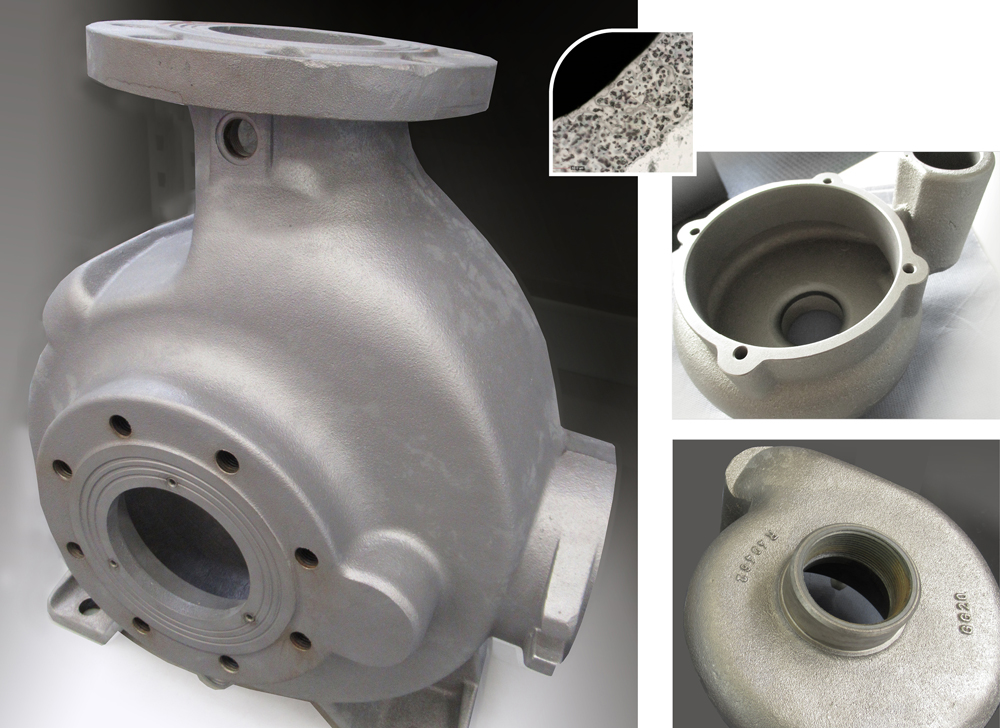
DIAPROTECT is the perfect solution when it comes to the highest level of wear protection. Wear protection combined with corrosion protection.
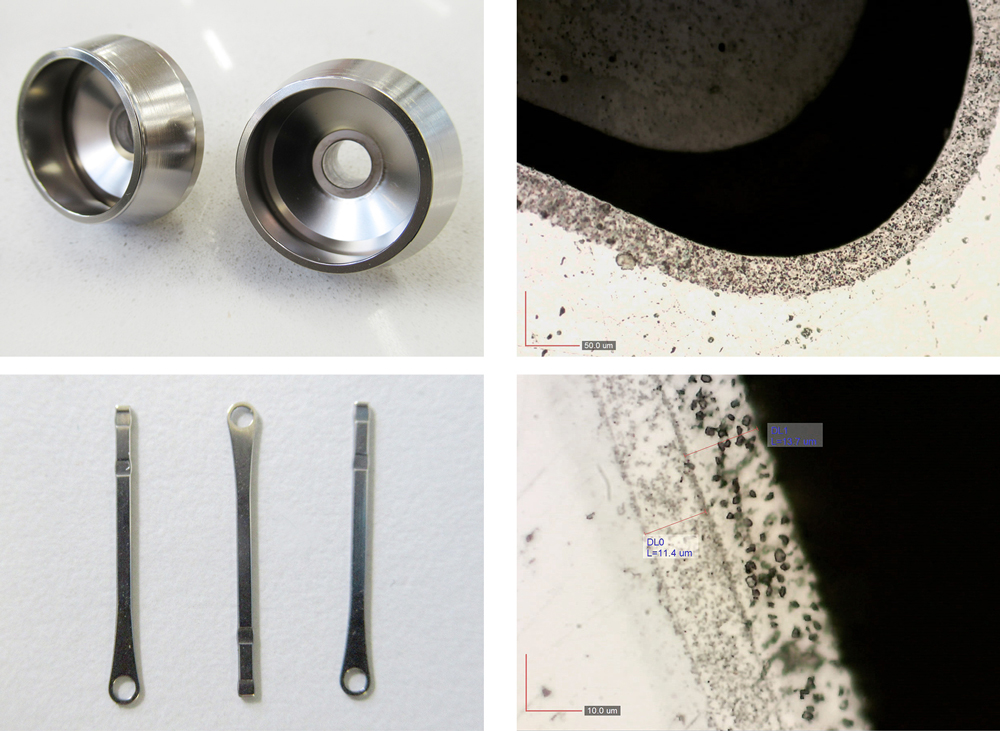
Application examples of the DIAProtect system against severe abrasive and chemical wear, combined with DIAShield as a running-in layer.
Advantages
Advantages of DIAPROTECT
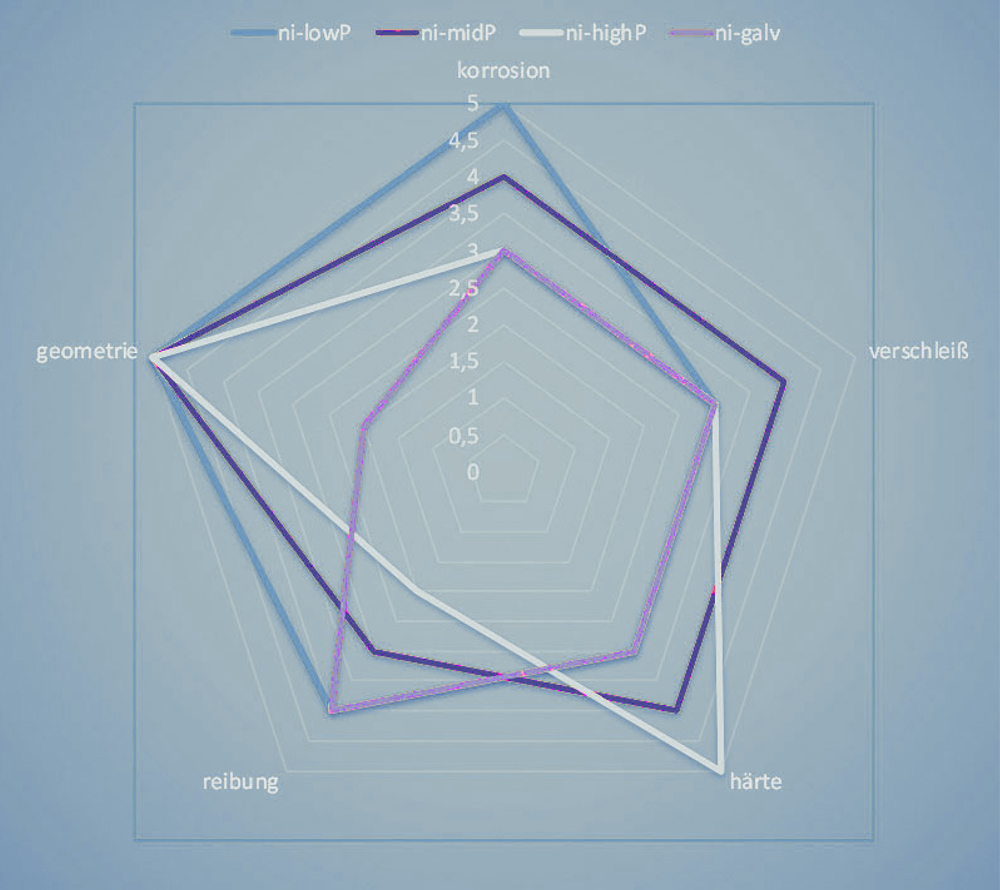
The dispersion layers based on nickel and nickel-phosphorus are characterized by the fact that they possess several important properties, and that these properties can be adapted to the requirements of the application depending on composition and/or heat treatment. This can be illustrated using a radar chart for qualitative assessment, based on which the user can select the properties needed.
Advantages at a Glance:
- Heavy-duty wear protection with diamond
- Available as a thin-film system (10-30 μ)
- Available as a thick-film system (30–100 μ) or higher
- Protection against particle and chemical wear
- Works on all substrates
- Effective combination of the important properties
- Wear protection and corrosion protection for metal surfaces
- Cost reduction compared to changing the substrate material
- Use without the need for structural modifications
- Insensitive to lubricants
- Increase in safety factor
Requirements
Requirements for Increasing Wear Resistance
The property of increasing the wear resistance of a surface is tied to certain structural requirements:
01
Suitability for Electrolytic Coating
The substrate material must be suitable for electrolytic coating, which is primarily reflected in very good adhesion of the coating to the substrate. Suitability for electrolytic coating with DIAPROTECT® must be clarified in advance with the client.
02
Sufficient Load-Bearing Capacity of the Substrate
The substrate must have sufficient load-bearing capacity to prevent excessive deformation and the associated collapse of the layer.
03
Hardness of the Contact Surfaces
When using a DIAPROTECT® dispersion coating, the interlocking between the hard particles (e.g. diamond) of the dispersion coating (usually a nickel or nickel-phosphorus layer) and the surface of the component is determined by the surface hardness of the component. A higher surface hardness makes it more difficult for the diamonds to penetrate the component surface. A lower surface hardness increases shearing (in the form of material wear) of the component's material through (frictional) wear.
Characteristics
For DIAPROTECT Dispersion Layers
The layers for increasing wear resistance are available in variants of different compositions, different deposition methods, as well as in combination with dispersion layers using different types of dispersion substances. The type of coating to be used depends on the load at the point of application and can consist of both wear load and corrosion load.
The thickness of the nickel layer is selected so that the particles (e.g. diamond) are homogeneously incorporated into the layer.
Another characteristic of the layer is provided by the chemical nickel layer (if used for the layer), with phosphorus contents between 2% and up to 13%, available in three states:
- Low phosphorus content – 2% to 5% / high deposition hardness / lower corrosion resistance
- Medium phosphorus content – 5% to 10% / medium deposition hardness / higher corrosion resistance
- High phosphorus content – 10% to 13% / lower deposition hardness / high corrosion resistance
The phosphorus content determines the base hardness of the nickel layer, the maximum hardness achievable through heat treatment, and the corrosion resistance.
Contact
Your Inquiry
Do you have questions about our product systems or fields of application? We would be happy to advise you comprehensively via our contact form.