

DIAGRIP®
The Magic Coating for Lasting Safety
Improved friction grip for your bolted, press-fit, and flange connections with DIAGRIP®
- Increase in friction grip by 0.5-0.8 μ
- 3 to 4 times higher transferable torque
- Coating applied directly, as a friction disc, or as a foil
- Applicable to components of all shapes and sizes
- Reusable multiple times
Applications
Improved Friction Grip
The dynamic transmission of mechanical forces and torques in machines can be achieved, among other things, by connecting the drive and machine elements through the pressing together of two (usually rotating) surfaces. Depending on the design of the machine, permanently operating but detachable, or cyclically operating transmission designs are used. Examples of this include flange connections, face-press connections, shaft-hub connections, but also bolted connections, which are generally among the permanent types. Cyclically operating systems for force and torque transmission consist, for example, of two discs pressed against each other.
In all cases, the efficiency of force or torque transmission is subject to the requirement of largely preventing friction. Among the relevant parameters of force transmission is, above all, the available surface area of the two contact partners (drive and counterpart). The more efficiently friction or slippage is prevented, the smaller and thus lighter the two contact partners can be designed structurally – increasing friction thus makes a decisive contribution to energy and material savings in plant and mechanical engineering. The increase in friction is achieved through DIAGRIP® dispersion coatings made of chemically or electrolytically deposited nickel and nickel-phosphorus layers with embedded hard particles. Diamond, in particular, in grain sizes of about 5 μm up to 35 μm, has proven effective as a hard particle, and up to 80 μm for special applications.
Friction-increasing surfaces are used in various forms, especially in the automotive industry for crankshafts and camshafts. Premium manufacturers also use these surfaces in steering, chassis, or transmission components. Particularly high demands in motorsport demonstrate the performance capability of such coatings. They are also found in wind turbines, where they prove convincing due to the achievable savings in component mass as well as the good corrosion resistance provided by the use of the nickel-phosphorus alloy as a coating material. The use of DIAGRIP® coatings enables vibration-resistant and durable flange connections.

At a Glance
Type
Dispersion layer made of nickel-phosphorus with diamond on substrate material (C75/C100/CU/Ni/stainless steel/plastic)
Properties
- Increased grip, detachable contact surface
- Adjustable hardness of the nickel-phosphorus layer (approx. 550 HV0.1 to approx. 950 HV0.1)
- High corrosion resistance
- Good contour accuracy and very uniform thickness of the nickel layer
- Can be used with existing designs
Application
Transmission of forces and torques in functional systems for creating force-fit composite systems with bolted, press-fit, or flange connections.
Coating Characteristics
Nickel-phosphorus layer from approx. 5 μm to approx. 22 μm with diamond grain size between 10 μm and 35 μm (layer thickness/grain size matched to each other), larger grain sizes (> 35 μm–80 μm) as a special solution
Friction value μ = 0.5–0.8
Substrate Characteristics
Base material suitable for electrolytic coating, with adapted, defined roughness
Example Solutions
DIAGRIP in Use
There Is Always a Tailor-Made Solution
The requirements are different for every component. Our DIAGRIP coating process is flexible. We adapt to your needs. Talk to us.
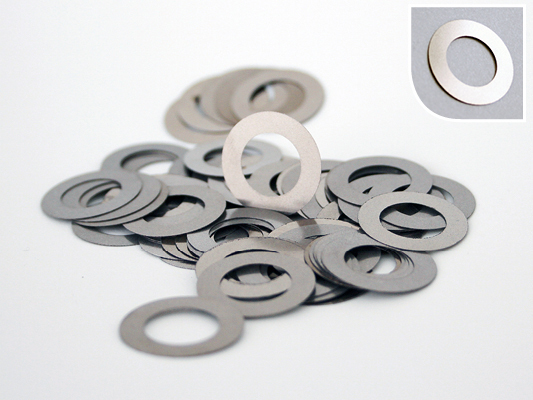
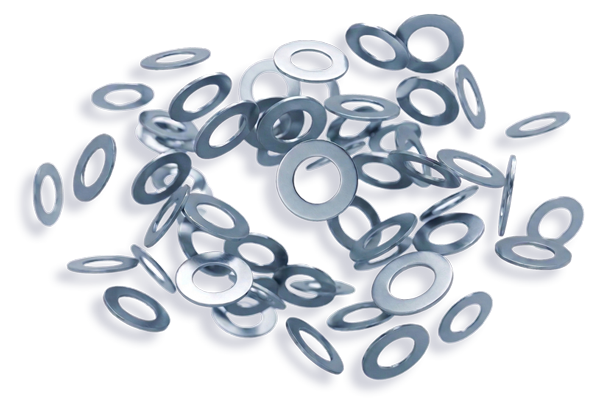
Small and medium-sized discs up to approx. 200 mm in diameter can be produced as stamped parts in large-scale production (millions) and as laser-cut parts starting from a quantity of 1. Manufacturing foils as base material makes it possible to provide custom parts at short notice within days.
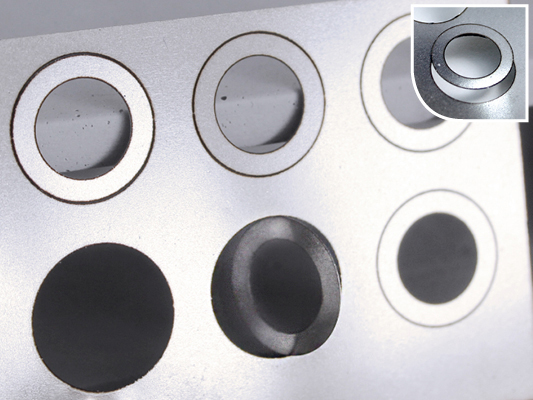
The disc blanks can also be manufactured as stamped and bent parts with 3D contours, for example to produce clips or mounting eyelets.
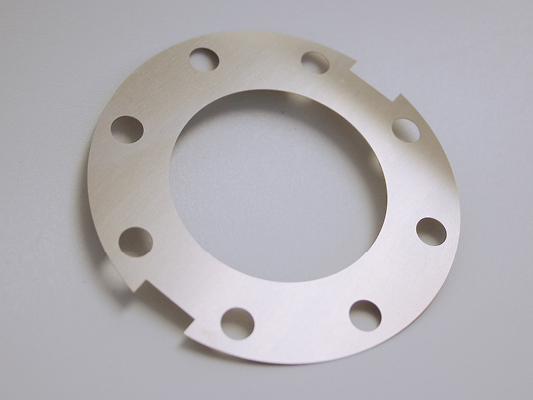
Shapes and sizes of the discs vary according to requirements. The discs can be reused if handled properly. Discs and foils can have any contour and do not necessarily have to be round.
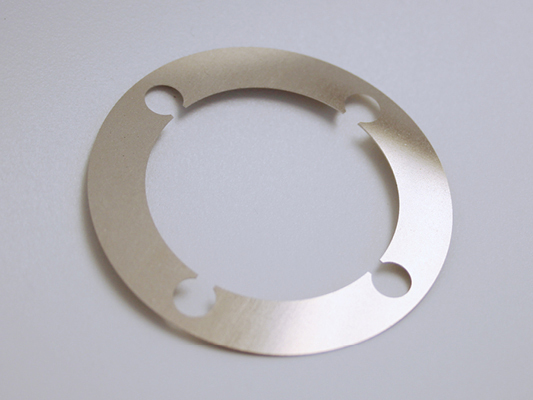
Shapes and sizes of the discs vary according to requirements. The discs can be reused if handled properly. Discs and foils can have any contour and do not necessarily have to be round.
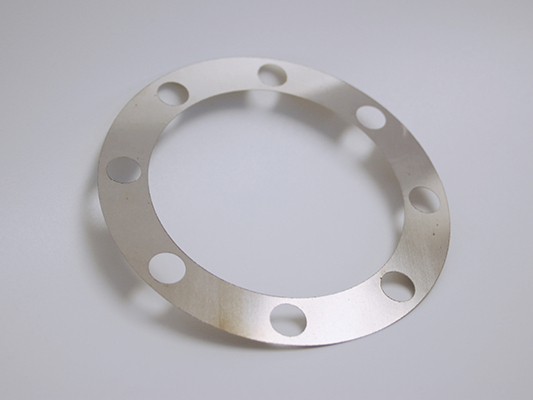
Shapes and sizes of the discs vary according to requirements. The discs can be reused if handled properly. Discs and foils can have any contour and do not necessarily have to be round.
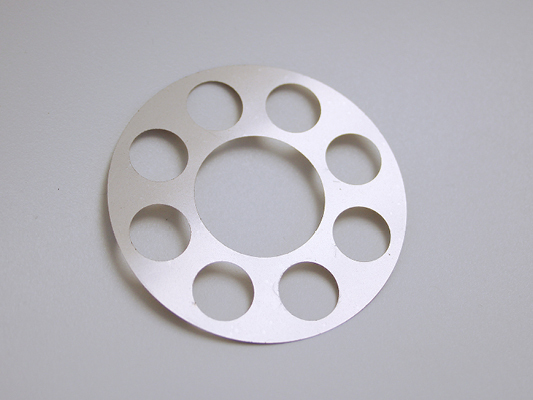
Shapes and sizes of the discs vary according to requirements. The discs can be reused if handled properly. Discs and foils can have any contour and do not necessarily have to be round.
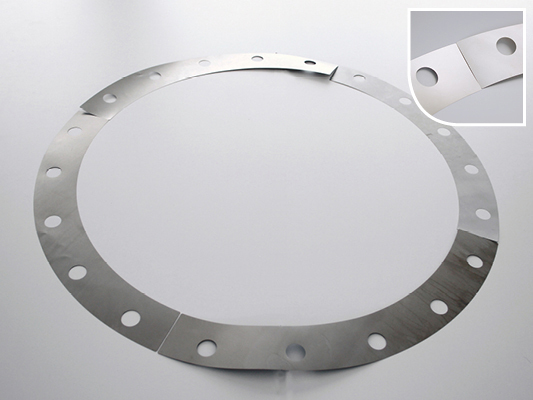
Large-format friction discs are used with diameters of over 2000 mm. By segmenting the discs and using intelligent fixing profiles in the segments, they can be handled easily during assembly. The thickness of the discs can range from 0.1 mm up to 50 mm. The discs and segments can be reused if handled properly.
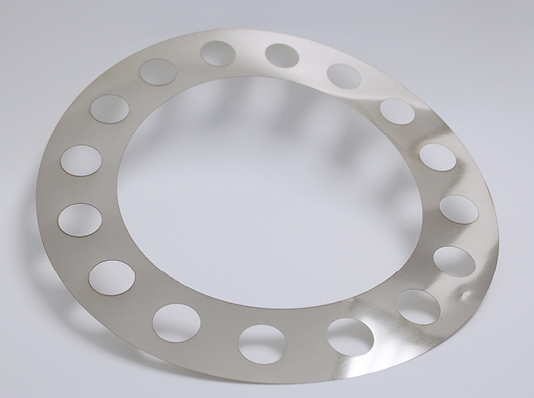
The discs can be reused if handled properly. Discs and foils can have any contour and do not necessarily have to be round.
Advantages
Advantages of DIAGRIP
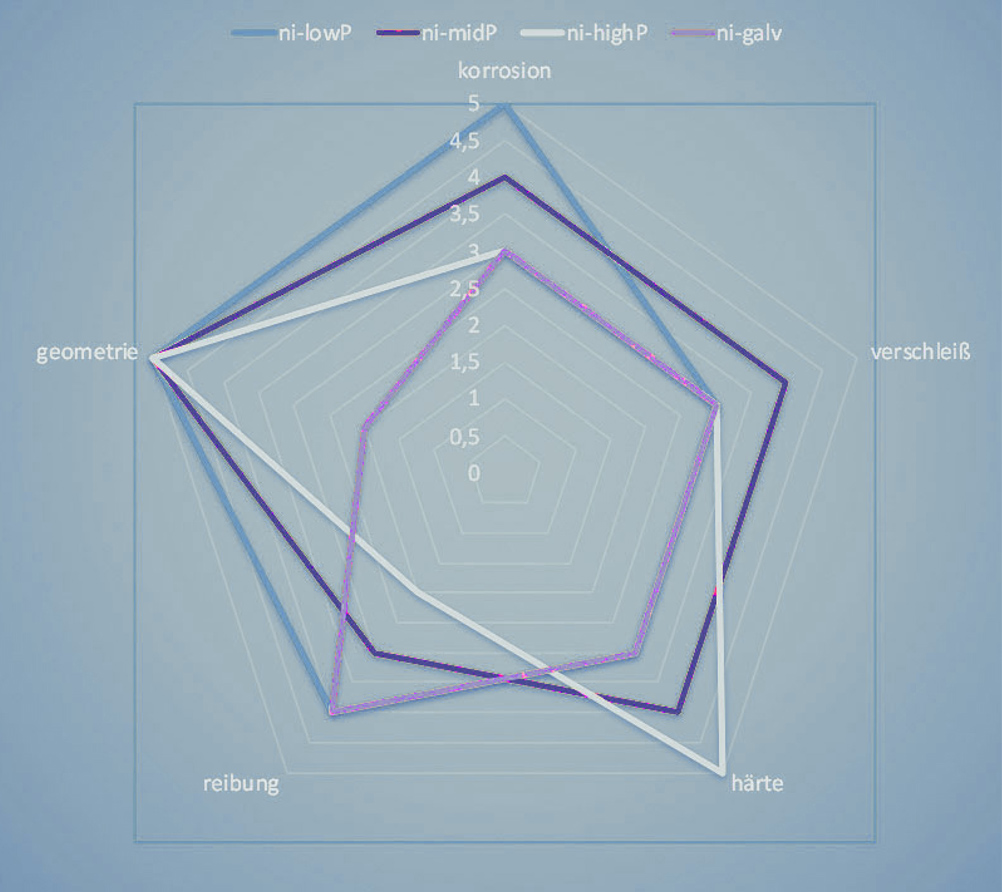
The dispersion layers based on nickel and nickel-phosphorus are characterized by the fact that they possess several important properties, and that these properties can be adapted to the requirements of the application depending on composition and/or heat treatment. This can be illustrated using a radar chart for qualitative assessment, based on which the user can select the properties needed. modification effort
Advantages at a Glance:
- Increase in transferable forces by 0.5–0.8 μ and torques of a connection per unit area, resulting in reduced component sizes and weights
- 3 to 4 times higher transferable torque
- Coating applied directly, as a friction disc, or as a foil
- Applicable to components of all shapes & sizes
- Increase in safety factor
- Cost reduction for individual components
- Easy handling
- Insensitive to lubricants
- Generally reusable after disassembly
- Use without the need for modifications
Requirements
Requirements for Increasing Friction Through Dispersion Layers
The friction-increasing property is tied to certain structural requirements, which serve as the basis for optimal force transmission:
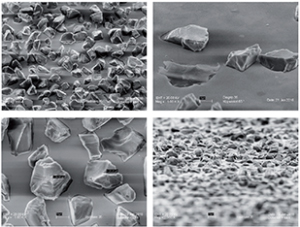
Top view of the nickel dispersion layer as a friction foil DIAGRIP® 35 with embedded diamond particles
01
Contact Surfaces for the Transmission of Forces and Torques
The magnitude of the forces and torques to be transmitted is directly related to the (macroscopic) surface proportions of the component partners, or to the geometric matching of the two component partners
02
Design of the Contact Surfaces
The efficiency of force and torque transmission depends on the actual (microscopic) contact surfaces. The roughness of the contact surfaces, as well as the orientation of machining structures such as turning or grinding marks, play a role here.
03
Hardness of the Contact Surfaces
The interlocking between the diamonds of the friction-increasing dispersion coating (usually a nickel or nickel-phosphorus layer) and the surface of the component is determined by the surface hardness of the component. A higher surface hardness makes it more difficult for the diamonds to penetrate the component surface. A lower surface hardness increases shearing (in the form of material wear) of the component's material through (frictional) wear; in other words, the force transmission decreases!
04
Coverage of the Contact Surfaces with Foreign Substances
The type of interlocking between the friction-increasing surface and
the contact partner is not affected, or only insignificantly affected, by foreign substances present (oil, grease, dirt)
05
Assembly and Disassembly of the Contact Surfaces
The contact surfaces can be easily separated from one another after loosening bolted connections or removing contact pressure
06
Design
The use of dispersion layers for force and torque transmission requires no structural changes to the components. This is especially true for the use of foils with a dispersion layer applied on one side, or preferably on both sides.
Characteristics
For DIAGRIP Friction-Increasing Dispersion Layers
The dispersion layers for increasing friction values are available with different sizes of polyhedral, sharp-edged diamonds. The diamond size to be used depends on the roughness of the surface of the friction pairing. The best results are achieved on surfaces with low roughness and low waviness – the result of metal processing using mechanical methods such as turning, milling, or grinding.
Both rough and wavy surfaces reduce the actual effective contact area between the friction-increasing dispersion layer and the component surfaces of the friction pairing. The following diamond grain sizes and fill levels are offered as standard:
The thickness of the nickel layer is selected so that the diamond particles protrude sufficiently far from the nickel layer, thereby reliably creating a material-locking bond with the counterpart of the friction pairing.
Another characteristic of the dispersion layer is provided by the chemically deposited nickel layer used, with phosphorus contents ranging from 1% up to 13%, available in three states:
> Low phosphorus content – 1% to 5% / high deposition hardness / lower corrosion resistance
> Medium phosphorus content – 5% to 10% / medium deposition hardness / higher corrosion resistance
> High phosphorus content – 10% to 13% / lower deposition hardness / high corrosion resistance
The phosphorus content determines the base hardness of the nickel layer, the maximum hardness achievable through heat treatment, and the corrosion resistance.
For special applications or particular shaping requirements of the friction pairing, it is possible to apply the nickel dispersion layer directly to the components used to create the friction pairing. It is strongly recommended to coordinate the choice of materials and the shaping with the manufacturer of the nickel dispersion layer.
As a quality characteristic of the DIAGRIP® friction-increasing dispersion coating, the friction value for the surface can be used as a reference. However, this value depends primarily on the applied contact pressure. Typical values range between approximately
μ = 0.5 and μ = 0.8. This represents an increase in friction values compared to approximately μ = 0.3 without the use of the coatings, resulting in an increase in transferable forces or torques by a factor of 3 to 4.
How It Works
How DIAGRIP Works
Schematic representation of the friction-increasing system consisting of the dispersion layer and the counterpart of the friction pairing
Contact
Your Inquiry
Do you have questions about our product systems or fields of application? We would be happy to advise you comprehensively via our contact form.